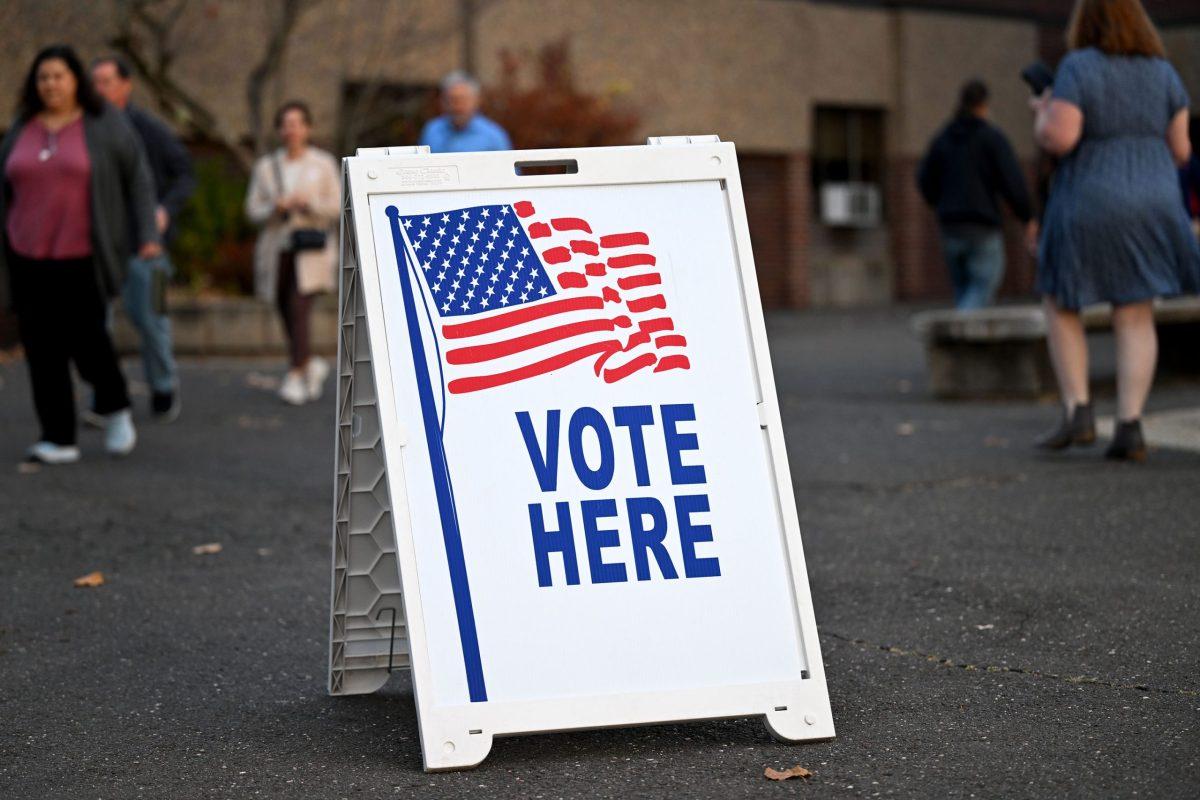










This upcoming election will be unlike any other and the results will deeply impact American citizens regardless of who wins in November.
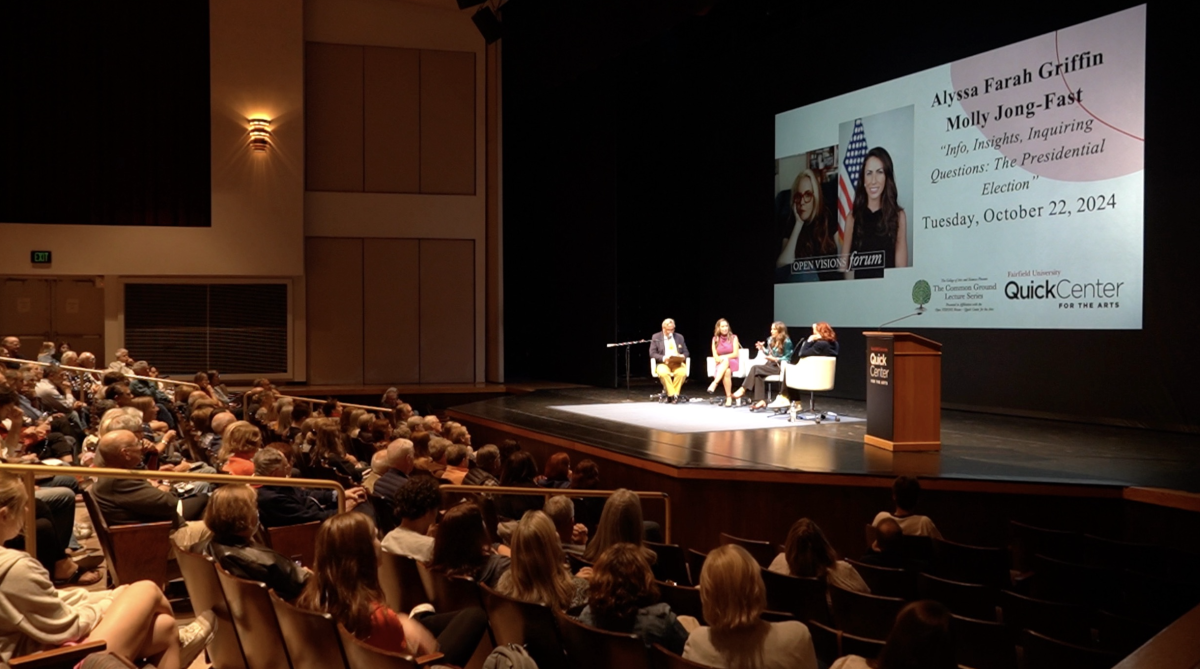
That was the message Alyssa Farah Griffin, co-host of ABC’s The View shared with students and Fairfield citizens at an Open Vision Forum celebrated on Oct. 22 with Molly Jong-Fast, author and host of Fast Politics. The event centered on the 2024 presidential election.
Moderated by professors Philip Eliasoph and Karla Barguiarena, the discussion centered around issues of the social media’s influence on voters and widespread misinformation.
Alyssa Farah Griffin recognized social media as a starting point for people’s decisions in the election.
“The purpose of social media is to get people excited and we are seeing that with Donald Trump and Kamala Harris,” said Griffin.
She analyzed both candidates’ media teams, showing respect for the Trump team’s embrace of pop culture and the “meme wars” used to connect with younger people. Griffin also praised Harris’ effective use of social media to amplify ideas consistently championed by leaders of the Democratic Party.
To target younger audiences, candidates have been making use of social media outlets. Media competition was dubbed “podcast wars” by Molly Jong-Fast, who also described social media as a powerful tool for candidates to connect with more potential voters.
“There were a lot of people in traditional media who were mad that Harris went on ‘Call Her Daddy,’ but the thing is, that’s five to ten million voters she wouldn’t have reached by going to the New York Times,” explained Jong-Fast.
Jong-Fast and Griffin further analyzed Trump’s public image and the younger audience he is appealing to, discussing recent social media appearances, such as his participation on Theo Von’s Podcast.
“He’s targeting young, largely white male voters who are not as likely to vote otherwise,” said Griffin.
Molly Jong-Fast further criticized the decision to pick Ohio Sen. JD Vance as a running mate, possibly closing off the former president to a wider demographic of voters.
“You could see a scenario where he might have picked Nikki Haley, who might have seemed a little more palatable and then he could have closed those margins a little bit,” said Jong-Fast.
When asked about the heightened potential for misinformation and how the media can respond to them, Jong-Fast referenced her practices while writing.
“I always link to the source. We should be able to link primary sources, finding where it was written, who said it, or whatever factual documents support your claim,” she explained.
She further explained that people should always be able to find second and third sources supporting information found online. Alyssa Farah Griffin encouraged students not only to dismiss clearly false information but also to call it out and let others know about it.
Griffin gave her predictions on the future, analyzing what a Trump win would entail and what a Harris win would entail. Griffin acknowledged Trump’s difference from past Republican candidates, comparing him with former presidential candidate and Utah Sen. Mitt Romney, whom both speakers agreed was a more palatable candidate. Griffin emphasized that we would likely see a change in the Republican party if Trump were to lose.
“If Trump loses, I think it will force a conversation within the Republican Party to ask the question of do we want to be a majority party again, where we appeal to more than half of the population through our values and policies,” Griffin explained.
Griffin explained that a Trump win would lead to drastic changes in the federal government. These changes, Griffin explained, would include shifting education to a state issue
Griffin continued to say that the outcome of this election will deeply impact all Americans.
“There is so much on the line, not only from a domestic standpoint, but there’s also a global perspective that I think we have to consider,” said Griffin.
Griffin compared the conflict in Ukraine to the Cold War and encouraged students to ask their parents or grandparents about America during a time when Russian aggression was making American politics unstable.
Something agreed by the audience and the participants on stage was the necessity for Republicans and Democrats to be able to have civil conversations about important issues.
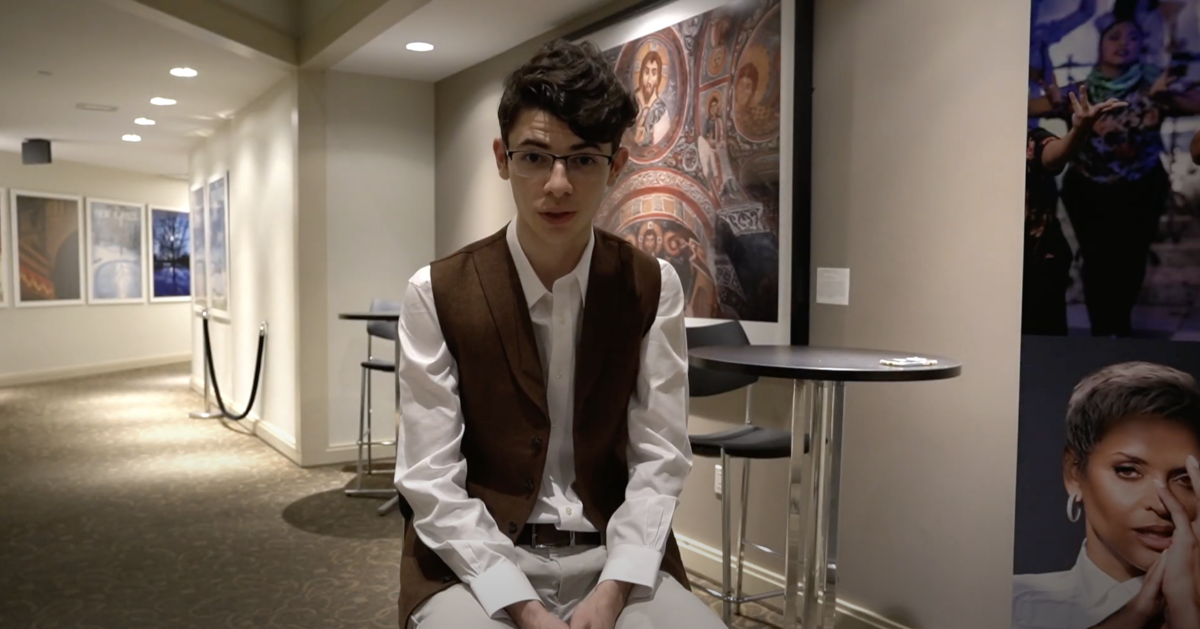
Fairfield first-year student Brendan Ross shared his reaction to the panel.
“I was expecting Alyssa Farah Griffin to be more far right, but she wasn’t. She was more center leaning. I thought it was good for them to be on stage agreeing on so many issues,” explained Ross.
Alyssa Farah Griffin and Molly Jong-Fast agreed on how most of the United States likely views politics.
“I think there’s a much more fertile ground of people being done with the nonsense of politicians that I don’t think is being properly measured,” explained Griffin.
Molly Jong-Fast further encouraged first-time voters to be skeptical of all information they consume and says to trust their gut when it comes to politics.