



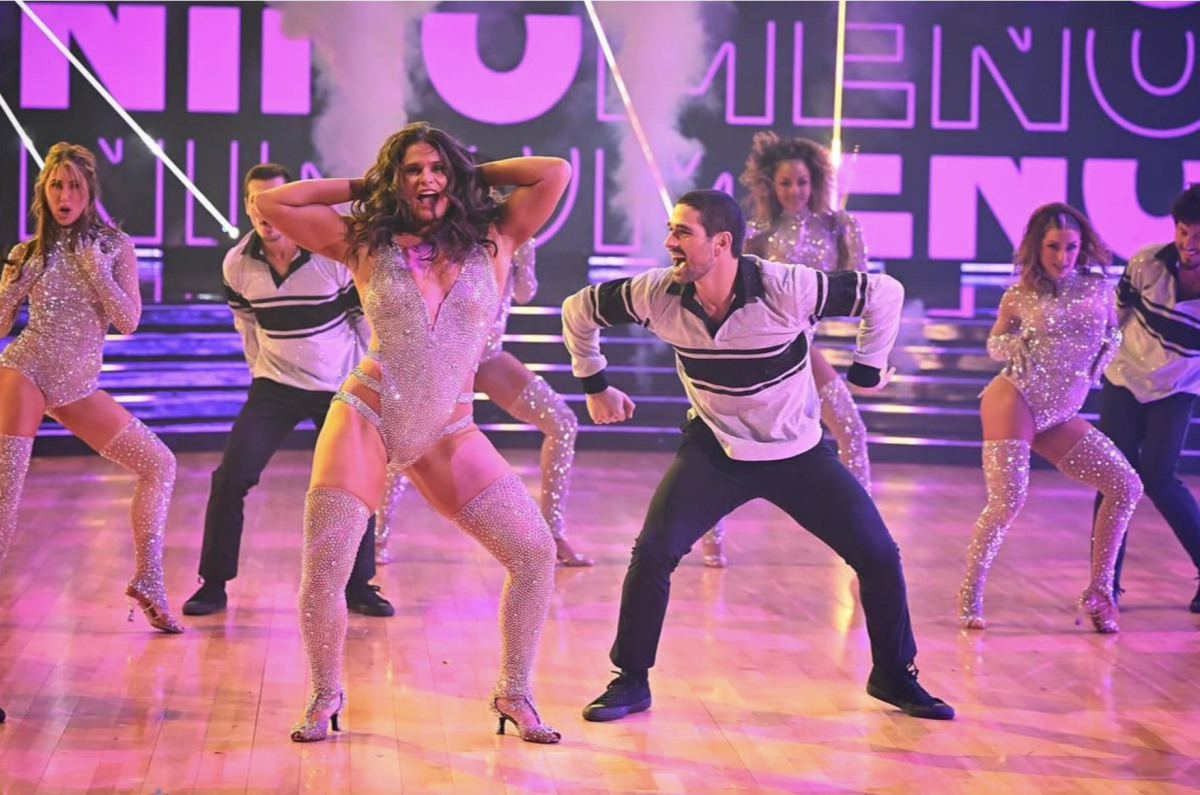
Fall television can mean many things. It is often dubbed the Gilmore Girls rewatch season. This year, however, pop culture was centered around a show that has been around for over 20 years, but witnessed a resurgence. Dancing with the Stars Season 33 has proved to be a revival for the series, gaining a new young audience and massive online traction.
Growing up, Dancing With the Stars was a show that was sometimes played in my house, but it was like background noise. I’d tune in occasionally but was nothing close to a regular fan.
As a dancer, it was a fun concept but because it was a ballroom show, I never gave it the same attention as competitions highlighting modern dance styles like jazz, hip hop or contemporary.
I found myself more drawn to shows like ‘So You Think You Can Dance’ or ‘World of Dance’ that competed in the same styles I participated in. But last season, after my TikTok For You Page was flooded with Dancing with the Stars reactions, I began watching and was quickly hooked.
Social media utilization from the show itself, its pro dancers and celebrity contestants made it a huge part of mainstream culture this year and reached fans outside its typical audience.
The Growth
Two years ago- Dancing with the Stars had an audience with a median age of around 63. Recently, the show has grabbed hold of Gen Z viewers like myself. According to Nielsen, during its Disney night episode, Dancing with the Stars became the top entertainment program for adults ages 18-49 (0.72 rating).

It’s kept high young-adult viewership throughout the season. The transformation proves social media’s ability to grow a show’s fans and also their willingness to engage with it.
Aside from the program’s explosive viewership, Dancing with the Stars is also seeing record voting participation. Each week, fans can vote and keep their favorite couples in the competition.
After last week’s season finale, the show revealed a record 32 million votes determined the results. According to Deadline, “the finale episode was also up 70% year-over-year among adults 18-49… The three-hour season-ender drew an impressive 1.14 rating, which is the best it’s done in seven years.”
The Dancing with the Stars’ newfound success is a direct result of its willingness to lean into social media.
Building the Brands of Pro Dancers
In the past, pro dancer’s seasons (how long they lasted in the competition) were usually limited by the dance capabilities of their assigned celebrity partner. However, as more pro dancers build individual brands on social media, some have attained followings greater than their celebrity counterparts.
While the show is formatted by pairing pro dancers with a celebrity, social media has made some of these pros equally, if not more famous than their partners. Fans don’t solely vote based on the celeb cast but want to see their favorite pro dancers take home a mirrorball trophy.
Personally, my favorite pro dancer is Season 28 Mirrorball champion Daniella Karagach. I often vote for her dances regardless of her partner, as I love to see her creative choreography.
One example is Rylee Arnold, who joined the show just last season. She already had a decent following prior to her joining the cast due to her bubbly TikTok personality and relation to her older sister and former pro dancer Lindsay Arnold.
Rylee Arnold has over a million followers on both TikTok and Instagram. Her first celebrity partner was Harry Jowsey, a reality TV star known for his time on dating shows like Too Hot to Handle.
The two attracted a cult following last season as fans thought the two made a “cute pair,” and they both played into these ideas online. Jowsey infamously made little improvement throughout his time on the show.
Regardless of his questionable dance abilities, he was a top-six finalist. Their unexpectedly long run was due to loyal fans who kept them around to see them interact and to ultimately support their content.
This season, Rylee Arnold was paired with Olympic bronze medalist gymnast Stephen Nedoroscik. Nedoroscik has over 600,000 Instagram followers, meaning she has a larger online following than the Olympic sensation.
Arnold is not the only pro-dancer whose viral social media branding has made her just as famous as her partner. Witney Carson has been a pro for 14 seasons and has accumulated a large following.
This season, she was paired with former NFL Player Danny Amendola, who won two Super Bowls with the New England Patriots. Amendola has amassed 286k followers on Instagram, while Carson has almost two million followers. Their account metrics prove social media allows pro dancers to be equally effective as celebrities in garnering fan bases.
This pair also set the internet into a frenzy after their contemporary dance went completely viral. TikTok was flooded with fans attempting to pull off their impressive lifts. Winners Joey Grazeidai and Jenna Johnson also started a trend after a section of their Disney night samba dance, inspired by Tarzan, went viral, proving how social media can extend momentum after an episode is out.
This year, Ezra Sosa experienced his first season as a Dancing with the Stars pro. At 24, Ezra is Gen Z. Even after being one of the first two couples eliminated, Ezra remains one of the most memorably branded dancers.
He consistently posted Dancing with the Stars content on TikTok throughout the season, dishing on drama, collaborating with cast members or recreating big moments from the last live show. Sosa clearly understands the immense power of branding, as he posted over 80 videos during the season, accumulating almost half a million followers on TikTok.
The Impact of Authentic Cast Content
Any show whose cast changes every season relies on getting an exciting lineup with big fan bases to bring viewers back another season.
For years, Dancing with the Stars has featured athletes, actors, actresses and singers. However, recently, it has begun casting more internet personalities, including TikTok and YouTube content creators and reality TV stars.
Internet personalities with millions of followers often introduce individuals who never considered a dance show to watch and vote. Season 30 winner Charli D’Amelio, paired with pro dancer Mark Ballas, being on the show was one of the first catalysts that sparked Gen Z interest.
Damelio is one of the most followed TikTok creators and currently has over 155 million followers on the app. This following proved to be a loyal base for her as she won the show, accumulating the most fan votes.

The show has seen similar trends this season, particularly with Rugby Olympic medalist Ilona Mahr, who placed second overall. While primarily known as an athlete, Maher also became a household name this past summer, with over 3.3 million followers on TikTok for her funny videos.
She and her dance partner, Alan Berstan, post countless behind-the-scenes content, mini dances and funny content in their TikToks leading up to the live shows. Posting consistently aside from their live episode appearances made their pairing beloved by fans- who loved watching the pair’s friendship.
Maher’s become an inspiration for body positivity, with the goal of proving that all body types are beautiful. As the second half of season 33 continued, online speculation labeled Maher as a weaker dancer compared to other competitors. But her loyal fanbase kept her in the competition, championing her personality and crediting her most improved.
But it’s not just the viral friendships and iconic characters that go viral. Couples who play into “showmances” also see high social media followings as fans want to see every cute moment and decide if the couples’ connections are real or for the show.
Pro-dancer Gleb Sarchancho and celebrity model Brookes Nader heavily leaned into a perceived showmance. They were eliminated early, but this did not stop them from using the show to their advantage. They continued to make videos fueling dating/break-up rumors, making fans look forward to deciphering hidden messages left in their TikTok videos.
Eventually, another couple emerged. Pro-dancer Sasha Faber and former bachelorette lead Jenn Tran played into their showmance in their dances/online and are now believed to be dating.
Before social media, Dancing with the Stars used showmances to their advantage for drama. However, the only way to show these moments was through the couples’ dancing and pre-performance video packages.
Now with the accessibility of social media apps, couples have more ways to tease their
showmances or make the public fall in love with their friendships. Couples also have more agency to control the narrative as they are not limited by what the producers include.
The Show Itself
Finally, let’s look at how the show itself has strategically leaned into social media use. Every week the show posts pictures and videos from each pair’s dances on a variety of social platforms.
You can find content from the couples’ performances on Instagram, YouTube and TikTok. When dances go viral, it drives interest for non-viewers to tune in the next week.
It also gives viewers a place to give their reactions to the dances, judges scores and eliminated celebs. In general, the more people talk about a show, the more likely they will lead others to tune in so they can contribute to the conversation and be in the loop.

The show has also utilized social media during its live shows. During the semifinals and finale episodes, two eliminated pro dancers Ezra Sosa and Emma Slater hosted a behind-the-scenes Tik-Tok live giving audiences a look backstage.
In the past, showrunners may have thought that putting out excessive content could backfire. It could be assumed that by posting the dances on TikTok- fans may see no reason to watch the two-hour episodes since they can see recaps online. However, this logic has been proven untrue as fan engagement is only going up.
Looking Ahead
Dancing with the Stars wrapped up last Tuesday, Nov. 26, and fans on TikTok are already making videos with suggestions of celebs to feature next season and who they believe should be sitting on the judge’s panel.
The Dancing with the Stars revival is a very unique case as a show with an older audience, as previously mentioned, has seen unprecedented growth and a complete audience demographic shift. It makes one wonder if their transformation can be replicated or not.