




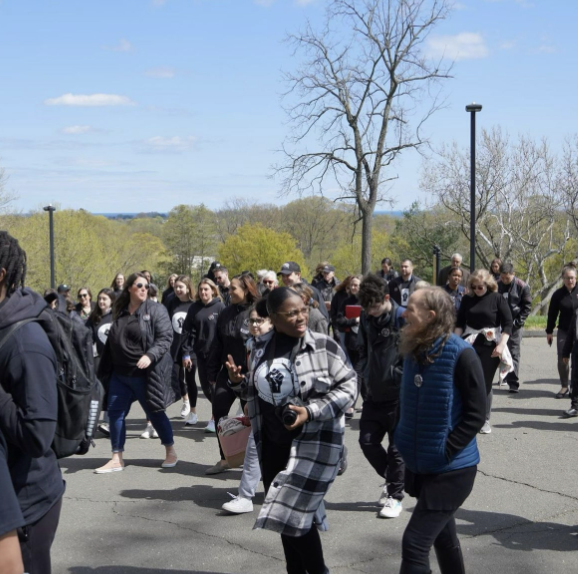
The campus culture at Fairfield University is distinctly apolitical. There are no longer any major demonstrations or protests on campus, though there were some just a few years ago. In April 2023, a Black Stags Matter march was held on campus. In Nov. 2023, a silent walk to call for a ceasefire in Gaza was organized. Political events, however, gather fewer and fewer students, as reported on by The Mirror during last year’s election, with students citing mental health as a reason to ignore politics. It seems The Fairfield University Student Association (FUSA) is the sole major opportunity to practice politics here at Fairfield.
That should be worrying to students.
Among other things, college is a time for students to flex their activism muscles. It is a time to learn how to organize and advocate. It is no accident that many political leaders in America, from former presidents to local officials, were leaders on their college campuses. Campus politics are a strange mixture of education and networking that helps to prepare America’s next generation of leaders. They are integral to the development of an informed citizenry, and they have the potential to cause real change in domestic and international politics.
This is, for the most part, not the case at Fairfield. Not anymore, at least.
Formerly, there were College Democrats and College Republicans at Fairfield. You can still find the clubs listed online, but they are not active anymore. Neither has met since the spring semester of last year, and the advisor for the two clubs did not respond to my attempts to reach out for an interview.
If students wanted to organize a political protest or gather for a cause, who then would they turn to? If students wanted to raise awareness about an issue that affects them, who on campus could help them do that? Even if a student simply wanted to find solidarity with peers who share their core beliefs, where would they search?
The answers to these questions don’t seem all that clear, and that’s a shame.
FUSA, of course, is a resource. I spoke with the newly elected President of FUSA, Courtney Sabagol, before the final day of the election. She told me about past FUSA achievements, such as getting the store on campus to sell snacks, and her future aspirations, such as having a sidewalk installed on the way to McAuliffe Hall. Her running mate, Amaia O’Brien, said similar things. “One of my biggest accomplishments was organizing the Pop-up Boutique at the end of my sophomore year.” She would like to implement policies such as “late-night dining options, water fountains in the Village dorms and improving the parking situation.”
Sabagol added that her proudest accomplishment with FUSA was acting as head marketer for the Celebration of Unity Series. “I helped bring visibility to events that promote social justice,” Sabagol said. One of those events was Black Stags Matter.
These are admirable achievements, and the political training that FUSA provides is legitimate, but FUSA simply cannot fill the gap that the newly apolitical nature of campus has created. It isn’t designed to, and doing so was never the point.
For current, and especially newer students, the lack of politics on campus may not seem all that strange, simply because they do not know any different, but it is an oddity. Colleges have always been bastions of political movements. Campus unrest was one of the defining factors of the Vietnam War era. Campus protests occurred against almost every conflict the United States has been involved in, culminating in massive protests against the war in Gaza.
Those sorts of events no longer happen at Fairfield, or if they do, they no longer receive much attention from the student body, which should seem odd. Last year, after all, was an election year, when political activism should have reached a height. This year, protests against the Trump administration have spread nationwide but not to Fairfield.
In light of all of this, I urge the students and faculty of Fairfield University to make a change. Political organizing and activism are just as much a part of college as education is, and arguably just as important for this country. If students do not learn to advocate for their interests here, where else will they learn? The apolitical turn that Fairfield has started to take needs to be reversed in exchange for a vibrantly aware community capable of advancing their interests.
I urge all students to organize themselves, no matter what beliefs they may hold. If you see something you want changed, find people who agree with you and start making others aware. If something on the news is important to you, let people know. Not only is it your responsibility as an informed global citizen to advocate for your interests, it is a privilege that college students get to do so.
Do not let that privilege go to waste.