You may remember the proverb, “March comes in like a lion and goes out like a lamb,” as a playful phrase from elementary school used to describe the unpredictable March weather. Often beginning with cold, occasionally snowy conditions and transitioning into milder, spring-like temperatures, this March metaphor is the perfect depiction of the challenges women in academia have overcome throughout history.
Women’s History Month highlights the evolution of women’s roles in society. The month of March honors the journey of women from oppression and inequality toward empowerment and recognition.
During Women’s History Month, inspirational women across the country celebrate their accomplishments and recognize their freedoms. Initially only a week-long celebration in Santa Rosa, Calif., it was not until 1987 that the U.S Congress declared March as “Women’s History Month”
according to the National Women’s History Museum.
Proudly presented by the National Women’s History Alliance (NWHA), the overarching theme for this year’s Women’s History Month is “Moving Forward Together! Women Educating & Inspiring Generations.”
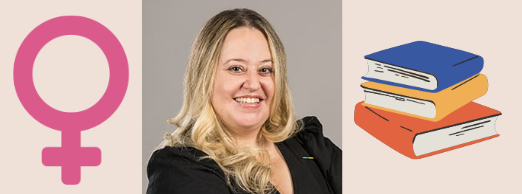
Reflecting upon the contributions of women to history, culture and society, Assistant Professor of the Practice in the Department of English and the Core Writing program, Dr. Tiffany Wilgar gives insight into her unconventional journey to her current position at Fairfield University.
You may run into Dr. Wilgar during your freshman year at Fairfield, as she teaches ENGL 1001– traditionally the preliminary writing course all first-years are required to take. “English studies was always my best subject in school, so it seemed like a natural fit,” Dr. Wilgar says in regards to her initial career path consideration.
After arriving at college and taking a few introductory-level courses, Dr. Wilgar soon realized she found every subject fascinating, a realization many eager-to-learn students may relate to. “I’ve technically been a History Major, a Psychology Major, a Biology Major and I tried majoring in Astronomy at one point, but that didn’t pan out for reasons I don’t remember,” Dr. Wilgar says. After exploring various fields during her undergraduate studies, Dr. Wilgar ultimately returned to her first love – English.
Dr. Wilgar’s journey towards achieving her current successes in the world of academia did not come without its difficulties. “Sexism in academia can be intense and pervasive.” Dr. Wilgar found it challenging to articulate how sexism manifests in academia, describing it as all-encompassing like the air we breathe: “It’s everywhere, all the time.”
As a hard-working woman in a male-dominated profession, Dr. Wilgar attempts to find a balance between fighting the patriarchy and picking her battles wisely. She says, “I try to deal with systemic sexism by building strong networks of fellow women scholars.”
When questioned about what helped shape her into the professor she is today, Dr. Wilgar could think of no one else to thank but her mother. “My mom isn’t the kind of person who thinks of herself as a feminist, but from my point of view, she is.” Kindness, thoughtfulness and inner strength are just a few of the qualities Dr. Wilgar deeply admires in her mother: Traits that have inspired her to become the ambitious woman she is today.
Along with Dr. Wilgar’s academic contributions to Fairfield University, she is also the faculty advisor for Fairfield’s Gender and Sexuality Alliance (GSA) and the Chair of the LGBTQ+ Faculty and Staff Affinity Group. In these positions, she builds a safe space for queer students, making daily life easier for those who identify as a member of the queer community. Dr. Wilgar says she understands how being “out” as an undergraduate student can be overwhelming, but with the support of others, embracing one’s authentic self can become a little less complicated.
Although Women’s History Month is coming to an inevitable close, women around the country and on Fairfield’s campus continue to celebrate their individuality, strength and confidence daily. Dr. Wilgar advises young women to “be vocal about what you’re bringing to the table because [the] work women do can often become invisible otherwise.”
Recognizing Women’s History Month is crucial to ensuring the contributions of women are not overlooked or undervalued. Dr. Wilgar and her peers at Fairfield University are inspiring future generations of women to strive for equality in and out of the classroom.