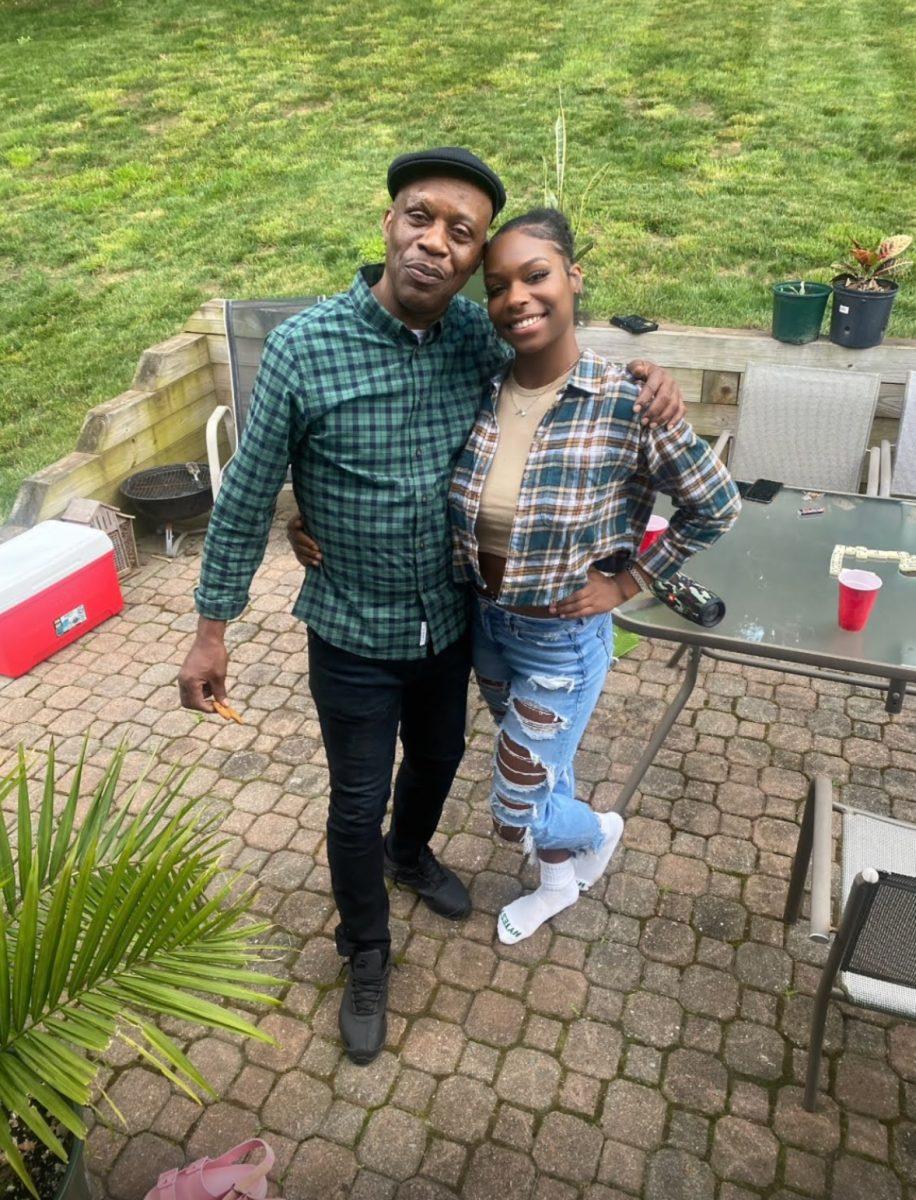
The day before spring break ended, while enjoying the white sandy beaches of the Dominican Republic, senior Mishell Pringle’s father died. In a rush of events, Pringle returned home not only to bury her father but to continue her academics while entering into the lifelong process of grieving.
Last year, an ocean away from her family, Pringle lost her father, but as a junior studying Management with a Public Relations minor, she prioritized academics and returned to school the day after spring break ended.
“There was just too much going on,” she recalls. “It was either my mental health or my education at that point.”
But after speaking with her brother, who implored her to talk to the Dean of Students Office, she reached out for help.
The Dean’s Office then let Pringle’s supervisors and professors know that her father had died and that she would be taking some time off.
“It’s appreciated now, looking back, because I didn’t need to break the news to everyone; I didn’t have to cry every time I talked about it with a professor or supervisor,” she remembers.
Still, the time off, while helpful, added to her stress. “I ended up only taking a week off because I was scared of falling behind. I prioritized my education over the grieving process,” she says.
“I just didn’t have the capacity for both,” Pringle added. “If I stayed at home for longer, I would’ve never come back.”
According to Pringle, although many may believe they’d never be able to return to school after the death of a parent, “You’re literally forced to.”
Approximately 10 other students have lost a parent since the start of the academic year, according to Dean of Students William Johnson. “Dealing with loss – particularly that of a parent or guardian […] can be even more challenging when it occurs at a young age,” he says.
It wasn’t just the students grappling with loss, but also Greenwald’s experience losing his mother just two years after he graduated college that prompted him to reach out to the student body in February. asking them to “Please keep all those who have lost a loved one in your prayers.”
Still, for Pringle, the grieving process has nonetheless “been a solitary journey.” Despite some members of the campus community checking in on her, like a priest and a member of the dean’s office, she continued to tell herself, “I’m fine, I can deal with it myself. It’s on me.”
Aside from relying on her family in Bridgeport, she hardly spoke to anyone else about the loss of her father, not even professors or her peers. She recalls that “People would start saying, ‘where you been’ because I just wouldn’t be around.”
However, it’s her belief that she “didn’t go about it the right way. I didn’t go to counseling. I should have been talking to people. There just wasn’t much the resources on campus could do for me.”
As a Resident Assistant, Pringle is not a stranger to resources on campus and their benefits, often having to refer students for support after traumatic events occur.
For students in need of support, Counseling and Psychological Services hosts a Grief Group, as well as individual counseling, with the ability to transfer students to other specialists. Campus Ministry has religious and spiritual guides who encourage students to stop by the Egan Chapel for support.
To the other students dealing with the loss of a loved one, Pringle offers words of strength: “Nobody prepares you for it. But even though they’re not physically here, remember what they wanted for you: graduation, a career, to be happy and successful. The person you lost wouldn’t want you losing them to set you back.”
A little over a year after her father’s death, Pringle attended a memorial soccer game in his honor at Manning’s High School in Westmoreland, Jamaica. As she prepares to graduate in May and pursue graduate school, Pringle will continue to carry the memory of her father with her.
“I know that he will guide me on my future path and put me in the right places at the right times.”