














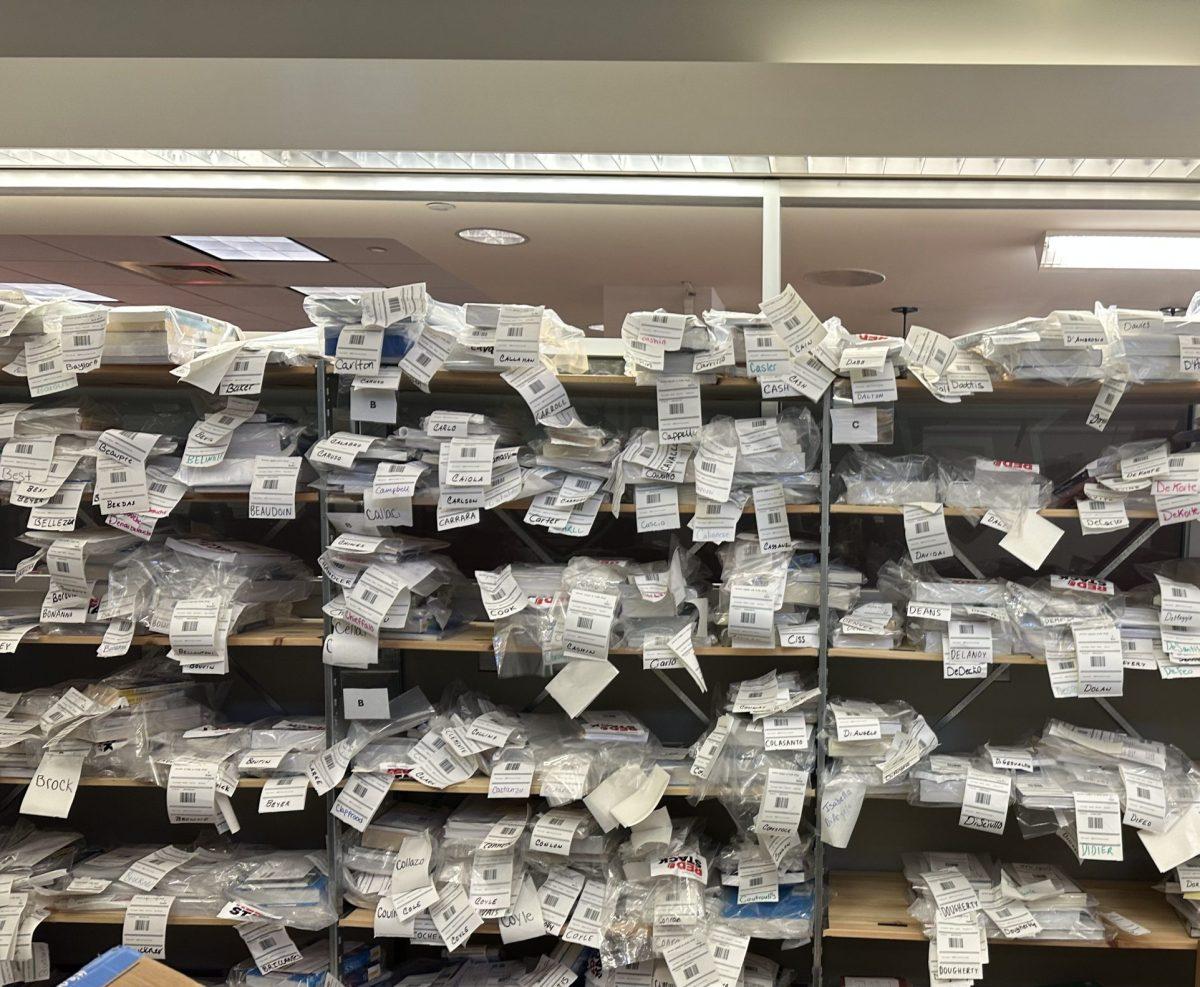
This semester, Fairfield University’s Red Stack Direct program, the $24 per credit bundle that provides students with textbook access and codes, has experienced delays in processing orders. While some students opted out and bought books independently, those who remained in the program have reported significant delays in receiving course materials four weeks into the semester.
Some students enrolled in the program have experienced delays that affect their coursework. Hannah Natlo, a sophomore Public Relations student, shared, “I have been behind in the readings for a few of my classes. I’ve had to go to the Spirit Shop multiple times a week, still waiting on the same books they say are on backorder with no indication of when they will actually come.” She states she is still waiting for one textbook’s access code.
Others say opting out of Red Stack has been worth the extra effort. Junior psychology major Abby Roberge explained that she spent about $140 buying her books individually. “Red Stack included a bunch of books I didn’t need. I tried Red Stack out for one year, but I didn’t get my books on time. It was worth my time and my money to opt out of it,” she said.
Sonya Huber, an English professor, says the delays have disrupted her course planning.
“I have now had to rearrange my schedule so that I don’t use the assigned textbooks for the first three or four weeks of classes. That’s really untenable. It’s so disruptive.”
She added that she may avoid Red Stack entirely in the future. “I think I’m just going to email students and ask them to purchase books independently,” she says.
Professors receive multiple emails months in advance to place book orders for Red Stack. Huber stresses her desire for the old textbook system in which students could purchase used books and sell them back at the end of the semester.
Higher Demand Blamed for Delays
Montana Murphy, Assistant Manager and Textbook Manager at the Stag Spirit Shop, acknowledged the issues, saying this semester’s biggest challenges have been with digital materials.
Access codes sometimes fail to transfer correctly from publishers to the school’s system, leading to delays or errors when students try to log in. However, some of these technological difficulties have been due to student error, according to Murphy.
Murphy noted that around half of the student population enrolled in Red Stack. Demand is higher this year than in previous years, but books have generally been arriving faster.
Late submissions from new or adjunct professors who are unfamiliar with Red Stack’s ordering system have made the process more complicated, says Murphy. Those delays on the front end, she said, push back when students can access their books.
Digital books on Blackboard take 24 to 48 hours to be available on the system, whereas physical books take about a week or two to ship. She stresses the importance of professors who are “adamant about physical books to get the order in as quickly as possible.”
Murphy emphasized that the Stag Spirit Shop staff are working hard to meet student needs. The team of just three full-time employees manages thousands of physical and digital books each semester, even offering digital access as an alternative when physical books are delayed. She stressed there will never be a “perfect” semester. According to Murphy, however, the shop improves its process each year and does everything possible to ensure students and faculty receive proper care.
She states, “We’re just trying to accommodate the best we can.”