Symbolic recognition wins applause but offers Palestinians no state, no safety, and nosovereignty.
Statehood or Protectorate?A viable state needs an independent economy, the capacity for self-defense, and territorialcontiguity. Current recognitions arrive with conditions that pre-limit sovereignty: exclude anyHamas member or associate from politics, demilitarize, deradicalize, downgrade ICC/ICJ cases,rewrite schoolbooks, and accept security doctrine set abroad—sometimes with outsiders floatedto oversee the project, including Tony Blair as viceroy. This framework recognizes a paralyzed neo-colonial protectorate, not a state that controls borders, airspace, coastline, movement, ortrade.
The Wave of RecognitionsSince Yasser Arafat proclaimed a Palestinian Independence Day on Nov. 15, 1988, 157 UNmember states have recognized Palestine as a state. The newest cluster includes ten U.S.-alignedgovernments: the United Kingdom, Canada, Portugal, and Australia; and Andorra, joiningFrance, Monaco, Luxembourg, Belgium, and Malta. A few Western holdouts—Germany, Italy,Hungary, Finland, and some Baltics—remain. If several move, as many states will recognizePalestine as recognize Israel.
Does Recognitions Matter?These recognitions are declarations, not obligations. They do not halt occupation, lift siege, orstop mass violence. The same capitals that give a rhetorical nod to Palestinian statehood continueto arm, train, trade with, and shield Israel diplomatically. “Reviews” of weapons transfers oftenleave parts and components flowing through U.S. supply chains; profit and interoperability keepthe relationships intact. Leaders proclaim boldness while avoiding sanctions, embargoes, orprosecutions. They can recognize a Palestinian state and still enable the killing—through bombs,spare parts, tactical intelligence, and even “lone soldiers.” Israel’s leadership, for its part, vows toblock every statehood and cease-fire measure, with U.S. backing.
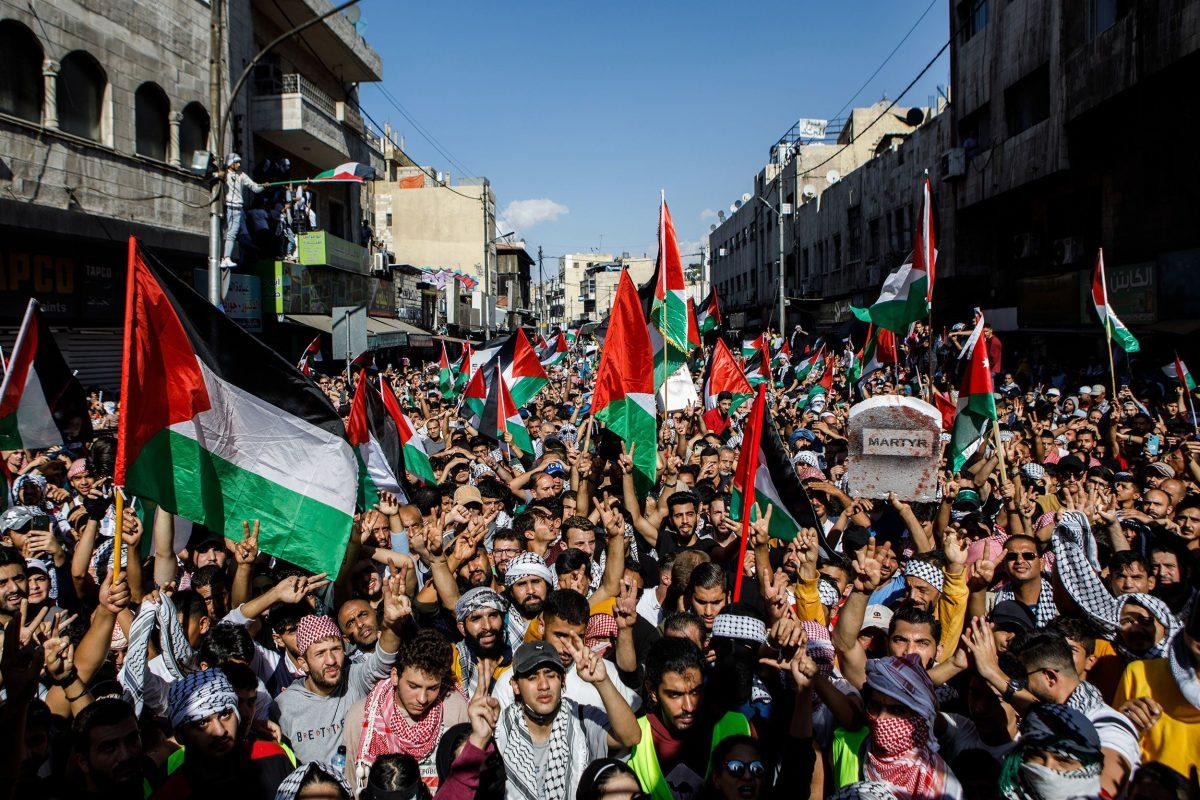
Why the Timing?Politics, not diplomacy. Street mobilizations—marches, encampments, strikes—raised the cost ofdoing nothing as Gaza burned. Recognition became the path of least resistance, a headline-friendly step that blunts protest without altering policy. Meanwhile, regular airstrikes in Gazahave killed on the order of 100 people a day.
The Record on the GroundThe same states applauding recognition abet what many experts now call genocide. Regionalgovernments host U.S. assets and fear a no-holds barred nuclear-armed Israel. From Al-UdeidAir Base in Qatar, Israeli jets bombed Doha, targeting and missing Hamas negotiators brokeringa hostage deal. Western officials label remaining Israeli soldiers “captives and hostages” whilethousands of Palestinians “prisoners”—including children—endure indefinite administrativedetention, sometimes without charge. Once out of office, the U.S. State Department’s MattMiller stated that Netanyahu, not Hamas, repeatedly blocked hostage release deals. In lock step,Washington vetoed nearly every cease-fire resolution at the UN Security Council.Losses are staggering. After two years of bombardment Gaza lists at least 67,173 dead and169,780 wounded, with thousands still under rubble. The Lancet, meanwhile, estimated over186,000 dead as of November 2024. A leaked IDF memo reported by Israeli magazine +972 putcivilian casualties at 83%. The UN Independent International Commission concluded that Israelhas committed genocide since Oct. 2023, meeting four of five Convention acts (all butforcible child transfer), with intent reflected in leaders’ statements and military conduct; statesowe a duty to prevent genocide now, not after the ICJ rules. Strikes on IVF clinics and embryossignal an assault on reproductive capacity and not military targets.
What Remains to “recognize”?Before the war, 2.3 million people lived in Gaza, one million under 14. Euro-Med Human RightsMonitor estimates 70,000–100,000 tons of explosives dropped on a captive population withnowhere to flee. E-SIMs and solar chargers let residents broadcast their own destruction. Anyonewith a phone cannot plausibly claim ignorance of what is happening there. In East Jerusalem andacross the West Bank, settlers enter population centers to “Judaize” land, sometimes moving intohomes as families still occupy them. Women and children appear among political prisoners heldunder renewable administrative detention.
Doctrine and MethodAnalyst Dan Steibock describes an “Obliteration doctrine”: scorched-earth tactics; collectiveretribution that treats all Gazans as guilty; deliberate civilian and infrastructure targeting; andmass, indiscriminate aerial bombing, now aided by AI-assisted target lists and “killprobabilities.” Officials and media repeat famine-denial lines—“no famine in Gaza”—thatreinforce historic atrocity playbooks. Humanitarian workers chart three famine waves centered inthe north and cite an internal “generals’ plan” that anticipated epidemics finishing what tankscould not. The aim: punish, empty, and control by degrading food, health, and energy systems. Inthis war, civilians are the pressure point, not collateral.
The Information BattlespaceYounger audiences have watched a war live-streamed from phones while newsrooms circulatededitorial directives to avoid terms like “genocide” or “occupation.” Early in the war, the ADL’sJonathan Greenblatt warned that a generation had been lost to TikTok; the platform problem, heimplied, was Palestinians showing the war. At the UN, Netanyahu put it bluntly: “We have tofight with the weapons that apply to the battlefields in which we’re engaged. And the mostimportant ones are social media. And the most important purchase that is going on right nowis….TikTok. TikTok number one.” Platform control, sanitized domestic coverage, and both-sidesframing continue to mask state complicity.
Pressure from Below-A Valve from AboveRecognition of Palestinian statehood functions as a pressure valve against surging activism. LastFriday (Oct. 4) Italian dockworkers and transport unions shut down major cities after Israeliflotilla raids in international waters. Spain dispatched naval vessels to accompany a flotilla, thenwithdrew at 100 nautical miles; Israeli forces boarded the ships anyway. Israel rebranded thecampaign from “Selfie flotilla” to “Hamas flotilla,” invoking terrorism to justify force againstunarmed boats. Such actions, along with campus encampments, helped force recognitions; theydid not, however, change the policy architecture.
The Annexation TestAs Mouin Rabbani argues, the decisive moment will come if or when Israel annexes parts or allthe West Bank with U.S. cover. Newly recognizing states will then be faced with a stark choice:either impose embargoes and sanctions consistent with their declarations or stall with tokendesignations while defense and trade continue. Domestic mobilization will determine which pathproves politically cheaper.The polling inside Israel tells its own story. Recent figures reported in Haaretz show 79%unconcerned about famine, 82% supporting expulsion, and 64% asserting there are “noinnocents” in Gaza. That climate normalizes “obliteration” and lowers global thresholds formass-atrocity warfare. Current recognitions do not counter that shift. Only steps withconsequences—sanctions, embargoes, and legal accountability—can change incentives and makerecognition mean statehood, safety, and sovereignty, rather than a ceremony that leaves the waruntouched.
This is a letter to the editor. Silvia Marsans-Sakly is an Associate Professor of the Practice, History and the Islamic World.