First off, I’d like to remind you that in order to judge the quality of a movie, the only way to have a truly valid opinion is to actually watch the film. I know this falls on deaf ears, as the communal consensus on “TRON: Ares” is that of failure and disappointment. “It’s not a proper sequel to ‘TRON: Legacy’! Jared Leto is the lead, so it’s automatically bad! The plot and characters lack depth!” To those points, I say, you’re not necessarily wrong.
“Ares” is by no means a continuation of “Legacy”’s story, and only one character from the 2010 film makes an appearance in 2025 (even then, it’s not exactly the same person; instead, a digital representation of them is played by the original actor). None of the old crew returns, with a new director taking the franchise into a new generation.
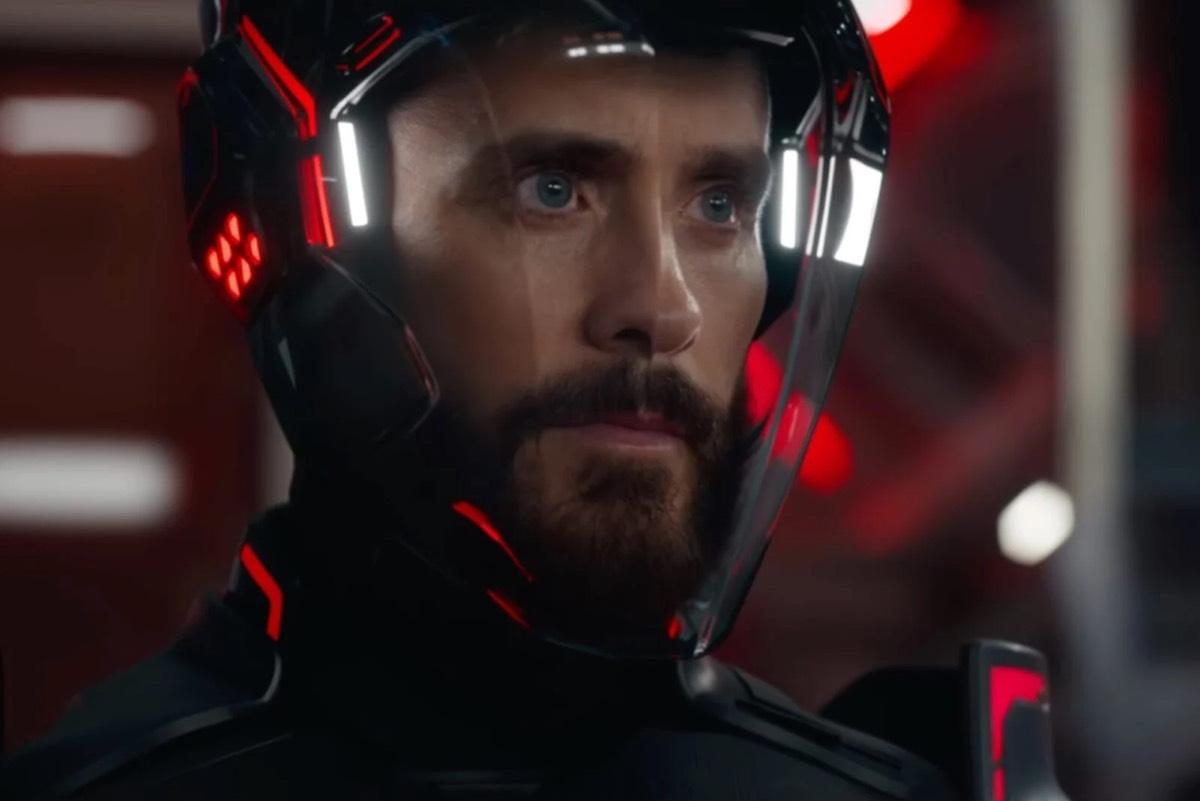
Yes, Jared Leto as the titular Ares program leaves something to be desired. Though his performance in the movie isn’t bad – Leto’s stiffness and general lack of strong emotion fit the role well – there’s no escaping the reputation of the actor in the real world. After years of controversy for his extreme method acting and a string of critically panned films, such as “Suicide Squad” (2016) or “Morbius” (2021), audiences have been conditioned to avoid Jared Leto, with the box office reflecting this.
“Ares” performed worse domestically in its opening weekend than “Morbius,” and given how few people have actually seen the movie, the general public feeds off the negativity surrounding the film. Audiences have noted the weak character development, lackluster plot and felt widely uninterested in the soft reboot of Disney’s classic sci-fi franchise.
But I, Brendan Hines, liked “TRON: Ares.”
Now, I know how that sounds, but let me explain: “TRON” has been a part of my life for a very long time. Ever since “Legacy” first crossed my radar in 2010, I’ve been enamored by the digital world of the Grid, listening to the epic soundtrack by Daft Punk and watching in awe of the stellar visual effects and spectacle of it all. I played the video games, watched the original ‘82 film, and let me say, they’ve never been that great. The characters have always been undercooked but well-performed, the stories have always been secondary to the visuals, and the spectacle and sound have always been the franchise’s strengths.
So “Ares,” though marred by the reputation of its lead, is actually a very fitting and satisfying successor. Nine Inch Nails provides another excellent techno score; the action and effects remain impressive as ever, and the actors all do a solid job selling their roles. “Ares,” like the best sequels do, takes the aesthetics of both previous films and brings them together with a sense of reverence and respect, while building on them and uniquely expanding ideas. The story, while unremarkable, does a decent job of transitioning us from one set piece to the next with brevity, avoiding unnecessary details and focusing more on the journey than the destination.
Greta Lee is fine as the human lead, though the script isn’t doing anyone favors. Evan Peters stands out as the nepo-baby villain, and his tumultuous relationship with Gillian Anderson as his mother worked to engage me as the foundation for Ares’s plight to find independence from them. Jodie Turner-Smith also does good, underrated work with an admittedly underwritten role as Ares’s right-hand turned pursuer, Athena, and gives her more subtle emotion than expected.
In a world where we’ve already spent plenty of time in the Grid, “Ares” carves out new territory for the franchise, expanding across digital and real worlds while using the tools that worked before. The iconic light cycles and identity discs are back and as impressive as ever, with great new designs to complement what already exists.
While I acknowledge that “TRON: Ares” won’t win over any newcomers, it deserves a better chance than people are willing to give it. Besides, the franchise was already dead before this movie came along. “Ares”’s mere existence is all I’ve asked for the past 15 years, so I’m just happy to finally have it.