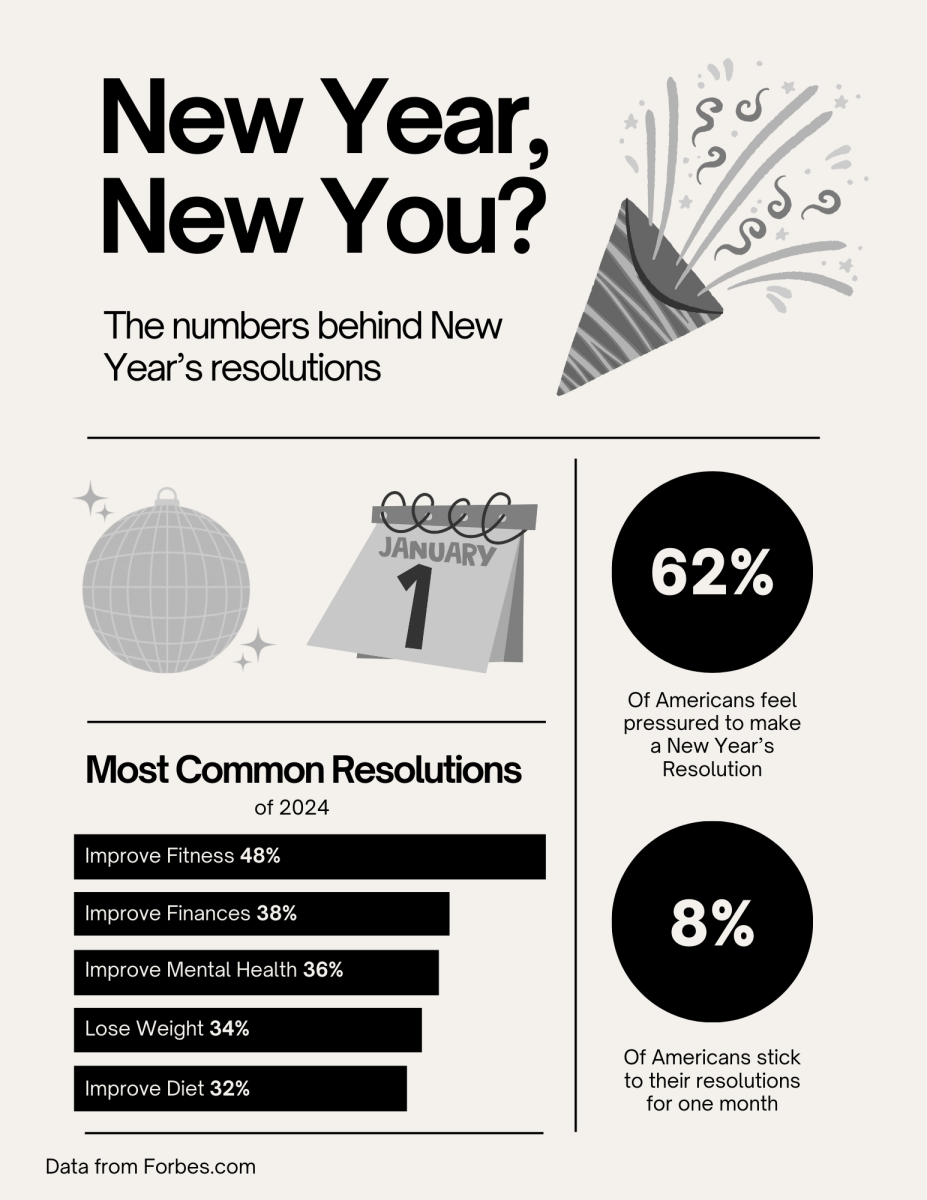
The second the clock hits midnight on January first, millions of people vow to become a new person for the new year. The idea of the new year’s resolution makes sense in theory – new year, new you. With the start of a fresh calendar year comes the opportunity for new beginnings, a fresh start to make the changes you’ve always wanted to make. However, I have a few bones to pick with the whole “New Year’s Resolution” idea. The concept is immensely overrated and more often than not, simply unattainable.
I’ve always thought that New Year’s resolutions simply come with too much pressure to be efficient. The idea of completely revamping your life on a specific day and then following through with these changes indefinitely (well, that’s the goal) is a stressful demand. If you want to implement a change in your life, I firmly believe that you should start as soon as you have the idea and work slowly toward your goals. This is infinitely less overwhelming than doing a complete 180 on January first. Say you decide you want to start journaling in the middle of November. Why would you wait a month and a half to start? Habits are built by consistency, so you’re far more likely to stick to journaling if you make your first entry sooner rather than later. Resolutions are excellent in theory, but ditch the “New Year” part. You’ll see considerably higher levels of success.
Another issue I have with the “New Year’s resolution” is that a staggering amount of them seem to be rooted in self-hatred as opposed to self-improvement. Not content with the way your life looks? Our society seems to think New Year’s resolutions are the be-all solution: lose weight, go to the gym, obtain a new wardrobe, take up less space, the list goes on. But nothing good has ever come out of a negative worldview – resolutions should seek to improve upon the foundations you have set for yourself. Those who take this approach will feel more confident and joyful looking back at themselves when they weigh their progress. Goals should help you become the best version of yourself, not someone you’ve hated yourself into becoming.
Finally (in the nicest way possible), I think many new year resolution-ers are a bit overconfident. If you’ve never run more than a mile but make it your goal to run a marathon by the end of the year, you are far more likely to crash and burn than if you, say, aim to simply become a more consistent runner and build up mileage. Especially if you lack self-motivation, do you really think that you’ll suddenly become ultra-dedicated just because it’s January first? I don’t think so. Goals need to be realistic above all things.
I’m truly not a New Year’s hater. I love the fun festivities, the uplifting atmosphere, and people’s positive intentions to make the year theirs. But I think we need to revisit what makes a New Year’s resolution something that can be achieved and celebrated instead of just another endeavor that didn’t work out. Let’s make 2026 the year of timely and attainable goals.