













After reading 20 books this summer, I haven’t picked up a book in over a month.
I can read pretty quickly and I like to think I am good at time management, but this semester has just been far too busy to read at the pace I typically do.
Over the Columbus Day break, I told myself I would commit to actually taking a break from all of my homework and read one of the books that had been on my shelves for a while. I tend to fall victim to buying three to four books when I go out, even though I already have several on my shelves.
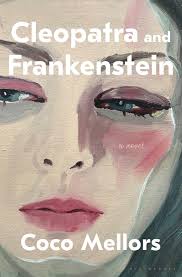
I decided to read Cleopatra and Frankenstein by Coco Mellors, a book that has been circling the more indie side of the infamous “booktok.”
I won’t call it popular because it’s nowhere near Colleen Hoover’s level of stardom, but many individuals who post book reviews have read it. And no one can seem to come to a conclusion about whether it’s good or not.
The book covers multiple points of view but tells the story of Cleo and Frank, who spontaneously get married in early 2000s New York, and the effect this has on their friends and family.
While that’s what the story is about, there’s really no discernable plot. It’s very similar to a Sally Rooney story, very character and prose heavy. If you like action I’d say this isn’t for you.
I adore a female protagonist who many readers deem “awful and annoying.” I feel spiritually connected to them and I have an unbreakable desire to defend them from all of the hate. I did this with Lady Macbeth when I started reading Shakespeare, I did it with Amy Dunne from Gone Girl, and now I’m doing it with Cleo.
“I hate Cleo and her goofy artsy poetic depression very much,” said a Goodreads user, essentially summarizing a majority of other reviews of the book.
I find that the real reason I love-hated female characters is that most of the time, they are too realistic for our own liking. And it’s not our fault. We as a society have been taught to hate female characters who make mistakes or don’t immediately succumb to what men want. It’s rooted in all misogyny today.
Take Eve from the Bible, right? Now, not all people are Catholic and I’m not myself, but almost 80% of people in the early 1700s were some form of Christian. They were taught that Eve was the one who slipped up and succumbed to the devil and since she was the first woman, it meant all women must be controlled or they would submit to the devil.
That’s why Lady Macbeth was always taught in schools as the villain. She wasn’t reserved and she knew what she wanted and wasn’t afraid to fight her husband for it. She wasn’t the ‘ideal’ woman at the time and therefore, she was the villain despite having numerous qualities that would argue otherwise if you read closely.
I see this treatment happening a lot with Cleo (Frank is less justified. I hated Frank). She is annoying. And she can be rude. But I think the immediate jump to saying, “I hate her!” is too much. We’re inclined to hate her because we don’t love to see such an openly abrasive woman who is so similar to us or people we know.
For example, toward the end of the book, Cleo and Frank get into a fight and end up fighting over whose childhood was more traumatizing. I was reading that scene originally thinking, “why are they having a trauma competition right now?” But as I continued reading, I realized it is such a realistic thing to happen in an argument. You get so heated that you don’t even want to hear what the other person has to say. Is it a great thing to do? No. Is it realistic? Absolutely.
I also found myself getting annoyed at Cleo for wanting to bring Frank everywhere, especially when she went to see her best friend Quentin after an emergency. I was irritated that she couldn’t just focus on her friend, but then I realized that she had a co-dependency problem. I wouldn’t believe you if you told me you don’t know people who bring their significant other everywhere or bring their closest friend everywhere.
It can be uncomfortable to read a character that is so similar to us but I don’t think that should put you off of this book. I loved how real it was. I loved how annoyed I got at the characters while simultaneously adoring them and wanting them to get their act together.
However, I didn’t love the excessive number of side characters. Cleo and Frank are the main characters, but there are chapters that include Cleo’s best friend, Frank’s office assistant, Frank’s best friend and his sister–it’s too much.
There were points where I wished Mellors had delved more into Cleo and Frank’s relationship because, frankly, I just didn’t care about Frank’s sister or his friends! Sorry. I didn’t like that their side stories didn’t contribute to the overall theme and I didn’t like that Mellors was forced to time jump to make up for lost pages.
I ended up giving the book four stars on Goodreads, only docking a star because of how frustrated I was with the side characters. If you like contemporary novels I recommend this book!