










For many Fairfield University students, studying abroad is a highly anticipated opportunity to immerse in new cultures while also continuing their education. Students enjoy going abroad because of its traveling opportunities and the opportunity to connect with friends and other students.
With over 50 programs in 25 countries, students often go on these trips during their junior year. However, as Fairfield’s study abroad offerings become more tailored to specific majors, some students are finding their options more limited than expected
While some majors have clearly outlined study-abroad options, others encounter unexpected restrictions. For years, nursing students at Fairfield have had a unique opportunity to study in Florence, Italy, during their sophomore year, where they complete geriatric clinical rotations. However, with limited spots available, competition is fierce.
Junior nursing major Cailinn Kiley highlighted this challenge, explaining that only a select few students are accepted each year.
“It also would have sucked to have to go during sophomore year instead of junior year when your friends are also going,” she said.
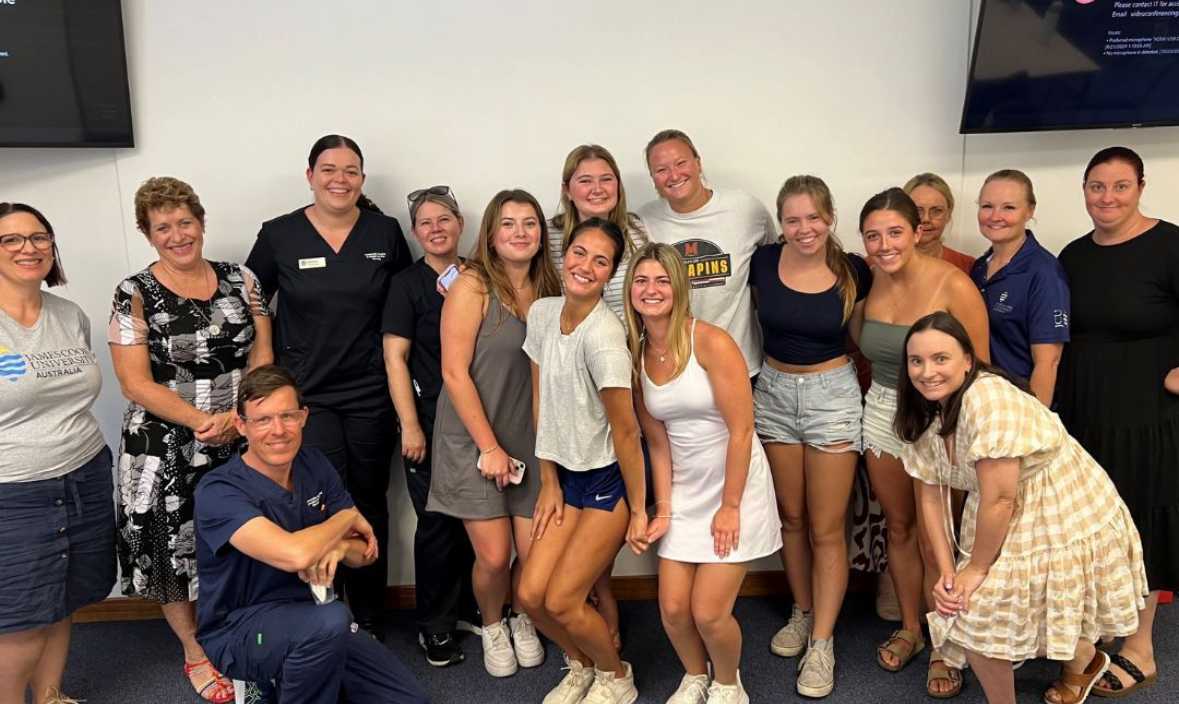
Instead, Kiley pursued a different route, applying to Fairfield’s nursing program in Australia. Along with 14 other students, she will complete her clinical rotations there over the summer and into the fall semester before returning to campus in the spring. “This option felt better for me because I will be able to go abroad at the same time as my friends, even if they are in a different country, and then be together back at school in the spring,” she explained.
While nursing students have clear pathways, students in other science-related majors face more obstacles. Public health majors, part of Fairfield’s Egan School of Nursing, have expressed frustration over the lack of clear communication about their study abroad options.
Junior Eileen Russell was surprised to learn that she could have studied abroad during her sophomore year—a detail she only discovered after receiving an email in late September.
“There was a lack of communication between students and study abroad programs,” Russell said. The email she received also mentioned an option for public health majors to study in Galway, Ireland, during their junior year. However, Russell had already completed a week-long program in Ireland the previous summer, unaware that a full-semester option existed for her major.
For some, the structured nature of these programs feels more like a restriction than a helpful guide. Junior Abigail Concaugh, a public health major, had planned to study in Florence during her junior spring semester alongside her friends and roommates. However, she encountered unexpected resistance from Global Fairfield when she attempted to apply.
“I was never made aware that my major would limit my study abroad choices,” Concaugh said. She described the extensive back-and-forth she endured with the Study Abroad office, initially being told that her application could not go through due to potential conflicts with her major coursework.
Students studying abroad must take at least one major or minor course. To navigate this requirement, Concaugh began the process of declaring a business minor, which would offer relevant courses abroad.
Once she explained this to Global Fairfield, her application was permitted to move forward. However, she was later informed that she needed to have completed an introductory course for her minor before applying—something she had already taken over winter break, over a year before her planned semester abroad.
“The whole thing felt unfair,” Concaugh said. “If I knew earlier the limitations of my major and everything about taking minor courses before applying, I would have done that.”
A recent article published in The Mirror explains how first-years are now encouraged to start thinking about studying abroad earlier.
“I mean, that is good,” Concaugh says. “Hopefully, they explain how their major can affect their choices instead of just the process in general.”
As Fairfield University continues refining its study abroad programs to align with academic requirements, students are calling for greater transparency and flexibility. While major-specific programs aim to enhance academic experiences, they may also limit students’ ability to explore the world on their terms. Many hope that future improvements in communication and policy adjustments will make studying abroad a more accessible and seamless experience for all students, regardless of major.