


















Mumford & Sons, the chart-topping British group, sounds like a band from a different era.
In some respects, this is genuinely true. Their last studio album, “Delta,” was released in 2018. Most people probably haven’t heard any songs from that album, or the album before, “Wilder Mind,” from 2015. Most people probably haven’t heard a new Mumford & Sons song since 2012, with the release of their second studio album, “Babel.”
Some readers may be shocked to learn that 2012 was 13 years ago. Back then, Mumford & Sons were kings of the Stomp Clap Hey bands. The leaders of an era of coffee shops and young Millennials. A bygone time of flannels and big fluffy dogs. You know, the early 2010s.
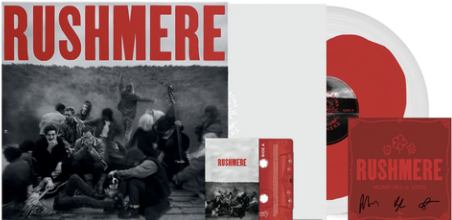
It may feel like a lifetime ago, but the band seems determined to bring that era back with the release of their fifth studio album, “Rushmere,” on March 28.
“Rushmere” is a short album, coming in at just over half an hour, but it is a big win for Mumford & Sons, especially after the departure of Winston Marshall, their former banjoist and lead guitarist, in 2021.
That’s not to say it’s a great album, but truthfully, it doesn’t need to be a great album. Mumford & Sons did well a decade ago because they were consistent and fun. Experimentation didn’t work for the band on their last two albums, so to hear them return to basics is refreshing.
The opening song, “Malibu,” is the sort of perfectly self-pitying, folksy music that has worked so well for the band in the past. It’s slow, sad and just introspective enough to pass for intellectual while still remaining playable on your average bar radio station. In short, it’s a Mumford & Sons masterpiece. It also reveals that Marcus Mumford’s voice has, if anything, only gained more depth of sound, which is undeniably a good thing.
They follow “Malibu” up with “Caroline,” which is a fun song with a great beat, but not a lot to say. This is a consistent theme with the album, and, again, not necessarily a bad thing.
The title song, “Rushmere,” on the other hand, is a standout. It’s positively electric, if that can even be said about a song featuring a banjo. Again, the lyrics are not particularly special, but that’s almost an advantage. “There’s madness and magic in the rain/There’s beauty in the pain,” is the sort of cliche line that a song like this needs. It has just enough thought in it to require no real thinking at all.
Most of the songs follow these outlines, with “Monochrome” being a real exception. Here, when they cut back the lyrics to just a few words in each line, they actually manage to achieve some real introspection. It’s endearing and heart-warming, and it makes for a good break between the Stomp Clap songs. It also suggests that the band knows how to make genuinely good songs, but chooses to make catchy songs, which is honestly commendable.
“Where It Belongs,” “Anchor” and “Blood On The Page” are more in the vein of “Caroline,” with some folksy emotion but not a lot of substance. That said, the instrumentation is good and Mumford’s voice is exceptional, which really makes up for it all.
“Surrender” and “Carry On,” like “Malibu” and “Rushmere,” are great Stomp Clap songs, which will easily join the ranks of Mumford & Sons’ older tracks.
This is not a great album, and that’s okay. In fact, it’s exactly what I wanted. With “Rushmere,” Mumford & Sons have managed to recapture the energy of their original works. It’s a victory that they desperately needed.