

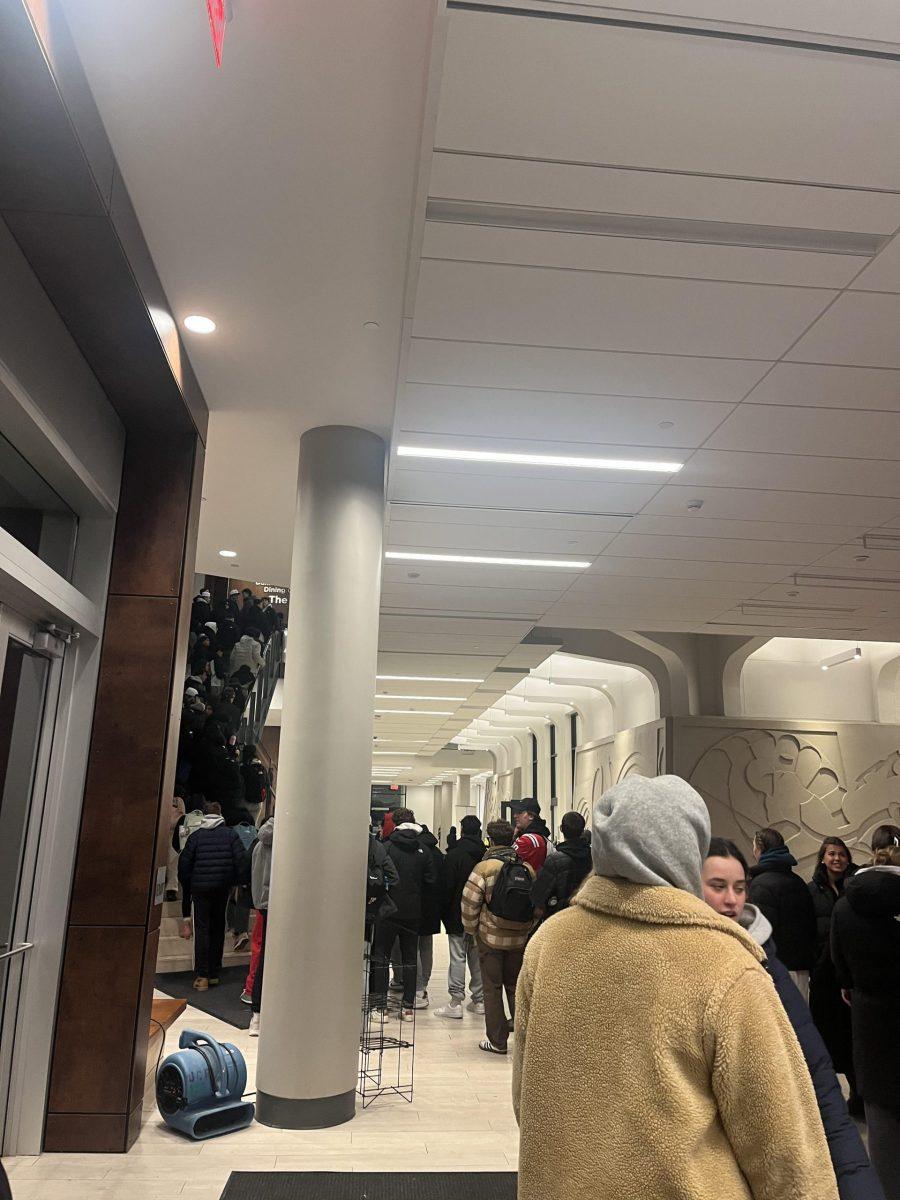

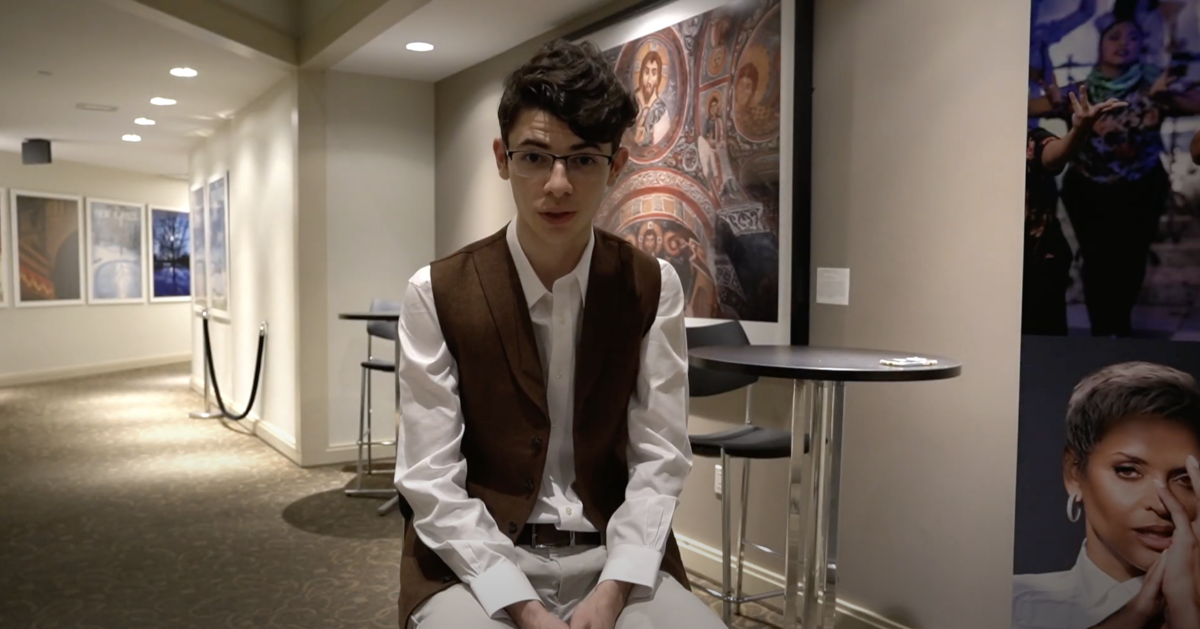

Fairfield University students are taking action to break down barriers and build understanding for people with disabilities through an interactive Disability Simulation. The event is taking place today from 4 to 7 p.m. in the Dolan School of Business Event Hall.
Students Christopher (Trip) Lyons, Maddie Babcock, and Brooke Butler are leading this event with the help of the Disability Awareness Committee and the Disability Awareness Club.
Created last spring by students Lyons and Babcock, the simulation aims to shed light on the physical, social, and emotional barriers that students with disabilities face on campus in their everyday lives.
“By barriers we mean, the lack of accessibility on campus, lack of universal design used within the classroom and microaggressions”. Lyons explained.
The simulation starts by randomly assigning a disability to each participant. They are then given a QR code that links to information about their assigned disability. The participant then goes through the five different stations: Classroom, Microaggressions, Accommodations, Campus Life, and Service Dogs. Each station highlights the different forms of exclusion that students with disabilities often face.
After participating in each station, there is time for an open discussion and group reflection. People can discuss the barriers they notice and suggest ways to make the campus more accessible.
“We want campus members to leave the simulation and see society and social barriers as the problem and not the person with the disability,” said Lyons.
Last spring’s event drew in strong engagement and positive reactions. Lyons explained that “students and faculty left the event telling us they had a much better understanding of disability and the ways in which we can lift socially constructed barriers.”
Beyond this, the event offers a FYE Multicultural credit for first-year students, and anyone who completes four of the five stations will be entered into a raffle for a $25 Amazon gift card.
Lyons, Babcock, and Butler encourage students, faculty, and staff to stop by, participate, and reflect on how small changes on campus can make Fairfield more accessible for everyone.