



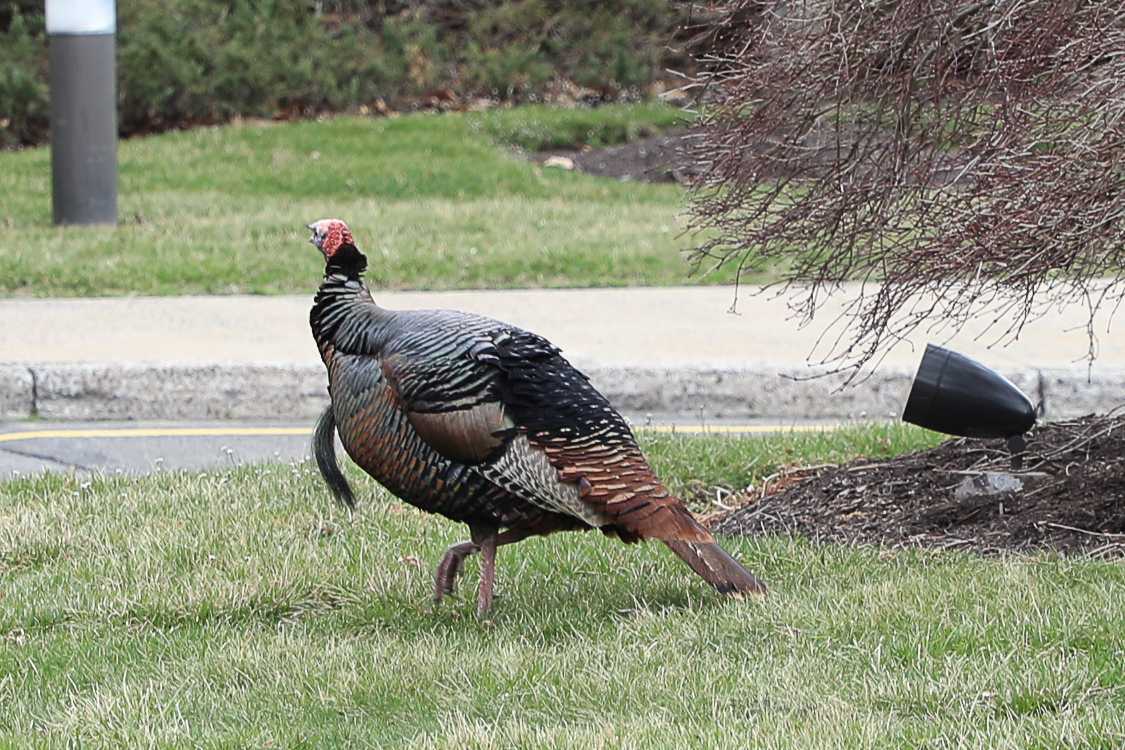
Most Fairfield University students can share a story about being chased by a turkey. But this year, the newest Stags might not have the classic first-year tale to tell.
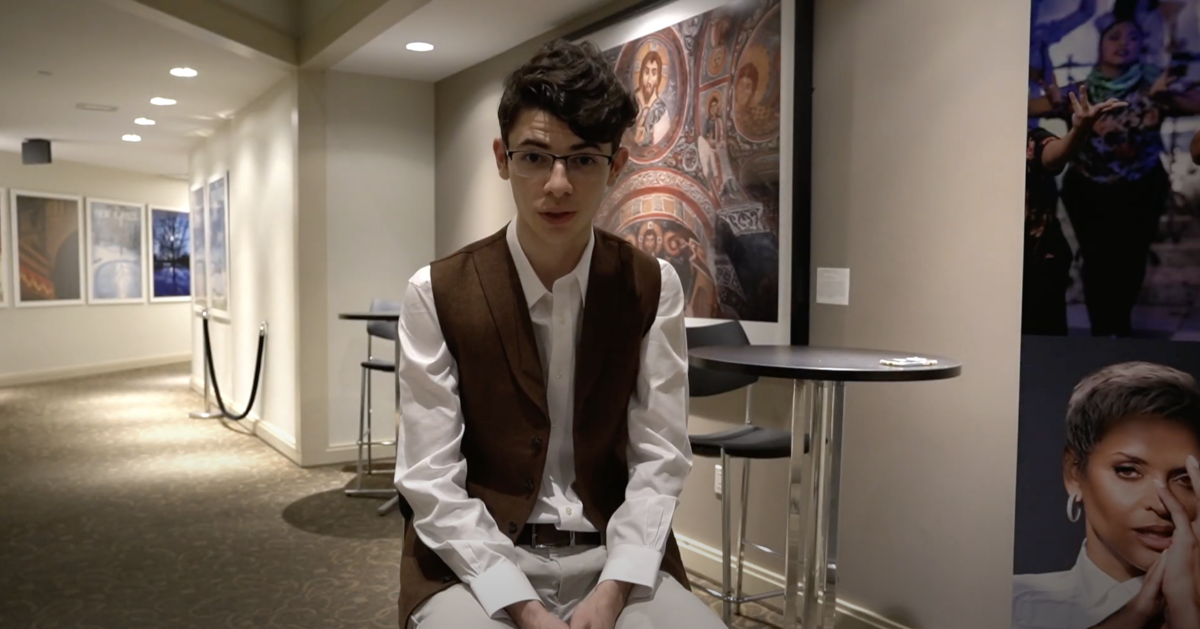
When Jeremy Kaler, Director of Student Engagement, asked his First-Year Experience class about the classic Fairfield rite of passage, being chased by a turkey, he did not get the reaction he expected.
“What turkeys?” the students replied.
The iconic New England autumn has begun, which means turkey season is now upon Connecticut. The iconic Fairfield University turkeys are back on everyone’s minds and often right in their path. Or at least, they’re supposed to be.
So is Fairfield University actually seeing fewer turkeys this year? According to wildlife experts, the answer is possibly, but they are far from gone.
Wild bird populations regulate themselves and fluctuate year to year. The number of birds depends on how well the eggs and hatchlings survive through the spring. Upon reaching out to William Cassidy, Wildlife Biologist at the Connecticut Department of Energy and Environmental Protection (DEEP), about this perceived lack of turkeys, he provided a scientific explanation.
“I am not surprised to hear that there may be fewer birds this year,” Cassidy said.
He explained that May 2025 was the third-wettest on record in Connecticut. When hens sit on nests during prolonged rain, both birds and eggs develop an odor, making them easy targets for predators. Fewer surviving eggs correlate to fewer younger turkeys later in the year.
Despite the occasional dip this year, Fairfield’s turkeys have a long history. Wild turkeys were extinct in Connecticut until 1975, when the state released 22 birds that had been captured in New York. Additional “trap and transfers” continued into the 1990s, with the closest release to Fairfield occurring in Cheshire in 1982. According to Cassidy, turkeys likely reached Fairfield University at some point in the mid-1980s.
Other experts say the campus is a prime environment for turkeys. “Turkeys thrive in environments like the one we have on Fairfield’s campus,” said Dr. Ashley Byun, Associate Professor of Biology. The patchy forests, open grassy areas and lack of predators are ideal. Turkeys eat seeds, nuts, acorns, berries, and small invertebrates, all of which are abundant on campus grounds. They are typically seen around Bellarmine, the Sophomore Village and the Media Center – areas with woody scenery and privacy from streets.
The turkeys are likely to stay in an area if not threatened by environmental factors. They may be seen frequently for part of the year if their winter needs are met elsewhere. “Traversing the area is calorically costly… so especially during winter, they will reduce their range to a core area that can provide for their day-to-day needs,” Cassidy said. If Fairfield campus provides them with the resources they need, they will stay put.
All experts emphasized one key rule: Do not feed the turkeys. “By feeding the birds, it can cause more harm than good,” said Rob Tomas, curator at Connecticut Beardsley Zoo. “They become habituated to humans… and we will lose the ‘wild’ in wild turkey.”
If students run into a turkey, “Act respectfully, but remember that it is at most a 25-pound bird,” Cassidy said. His suggestion is to give them a few yards of space, observe their behavior and continue walking. Typically, turkeys should not approach people or damage belongings or infrastructure.
Turkeys can become more aggressive during certain times of the year, including the spring breeding season, when males have been known to attack their own reflections in windows and become standoffish towards people.
Despite the temporary dip in sightings, Fairfield’s turkeys are not disappearing. “I don’t think wild turkeys will be leaving Fairfield’s campus anytime soon,” Byun said.
For now, students can expect the occasional feathered visitor, just maybe fewer chase stories this semester than before.